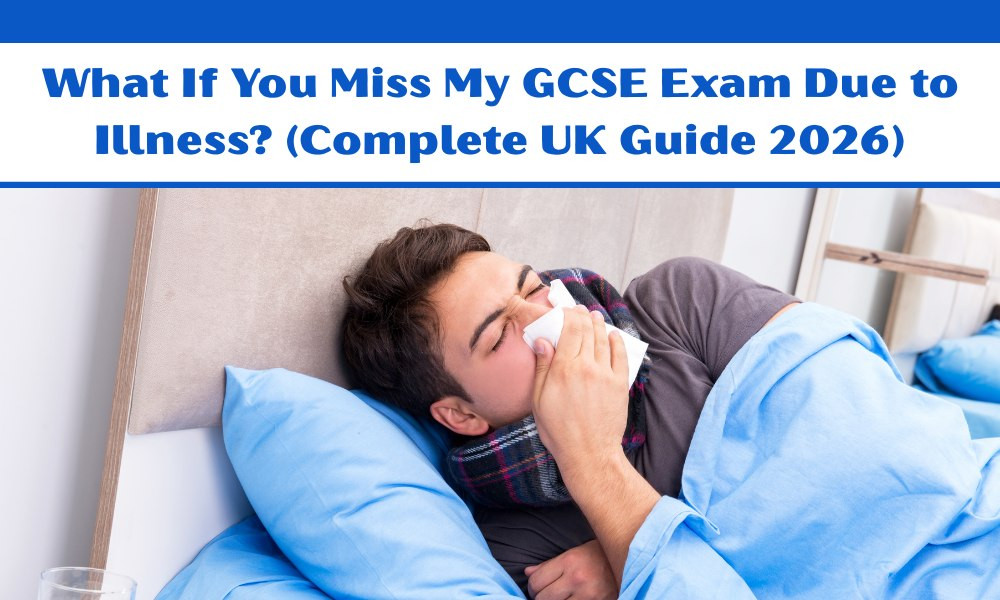
Missing a GCSE exam because of illness is one of the most stressful situations a student can face.
You’ve prepared for months, revised carefully, and then suddenly — on the day of the exam — you’re too unwell to attend. At that moment, it’s easy to panic and assume the worst.
But the reality is much more reassuring.
The UK exam system is designed to handle situations like this. Illness is recognised as something beyond your control, and there are official processes in place to support students who miss exams for genuine reasons.
Understanding what happens next can help you stay calm, make the right decisions, and protect your results.
Yes — if your illness is genuine and happens at the time of the exam, it is considered a valid reason.
Exam boards recognise that students cannot always control their health. Temporary illness, injury, or sudden medical issues are all accepted circumstances under official JCQ guidelines.
However, there is an important condition. The illness must directly affect your ability to sit the exam on that specific day. Long-term conditions or minor issues that do not prevent attendance may not always qualify.
This is why evidence and timing are so important.
If you miss your GCSE exam due to illness, the first thing to understand is this:
You cannot simply sit the same exam later.
In most cases, GCSE exams are fixed nationally, and there is no alternative sitting date for individual students.
Instead, your situation is handled through a process called special consideration.
This is where your exam centre applies to the exam board on your behalf, explaining your absence and providing supporting evidence.
Special consideration is a system used by exam boards to support students who are affected by circumstances beyond their control.
If approved, it can result in:
A small increase in marks if you were ill but still sat the exam
A calculated grade if you missed one paper but completed others
Adjustments based on your overall performance
For example, if you completed some exams in a subject but missed one due to illness, the exam board may estimate your mark using your performance in the papers you did sit.
However, this is not automatic. Your school or exam centre must apply for it.
In many cases, yes — but only under certain conditions.
To receive a grade through special consideration, you usually need to have completed a minimum portion of the subject’s assessment. For GCSEs, this is often around 15% of the total assessment.
If you meet this requirement, the exam board may use your existing marks to calculate your final grade.
But if you miss all exams for a subject, it becomes much more difficult. In most cases, no grade can be awarded, and you may need to retake the exam in a future series.
If you are too ill to attend your exam, your priority is not to panic — it is to act quickly.
You should contact your school or exam centre as soon as possible. This allows them to begin the process of reporting your absence and preparing a special consideration application.
In most cases, you will also need medical evidence, such as a doctor’s note or confirmation of illness.
Delaying this step can reduce your chances of receiving support, so timing is critical.
One of the biggest mistakes students make is assuming that missing an exam means automatic failure.
This is not true. The system is designed to be fair, and illness is taken seriously.
Another mistake is not informing the exam centre immediately. Some students wait too long, which makes it harder to provide evidence or apply for special consideration.
Some students also assume they can retake the exam later in the same series. In reality, this is rarely possible. Most GCSE exams can only be retaken in the next exam cycle.
Avoiding these misunderstandings can help you handle the situation more effectively.
If you feel unwell during the exam but still attend, you should inform an invigilator immediately.
In this case, you may still be eligible for special consideration. Instead of missing the exam completely, you could receive a small mark adjustment to reflect the impact of your illness.
This option is often better than missing the exam entirely, especially if your condition allows you to continue.
This is one of the most common worries students have.
The short answer is no — not permanently.
Even if you miss an exam and cannot receive a grade, you still have options. GCSE exams can be retaken in future exam series, including the following year or in some cases November sessions.
What matters most is how you respond.
One missed exam does not define your future, especially if you take the right steps afterwards.
While illness cannot always be prevented, there are steps you can take to reduce risk.
Staying organised, getting enough rest, and preparing your exam essentials in advance can help you avoid unnecessary stress.
If you want to make sure you are fully prepared, you can follow this guide.
Being prepared allows you to focus on your health and performance without added pressure.
Can I resit the same GCSE exam later that week?
No, GCSE exams are fixed nationally and cannot be rescheduled individually.
Do I need a doctor’s note?
In most cases, yes. Medical evidence strengthens your special consideration application.
Will I automatically fail if I miss an exam?
No. You may still receive a grade if you qualify for special consideration.
What if I miss all exams in a subject?
You will likely need to retake the subject in a future exam series.
How fast should I inform my school?
Immediately. The sooner you report your illness, the better your chances of support.
Missing a GCSE exam due to illness is stressful, but it is not the end of the road.
The UK exam system recognises that situations like this happen, and there are clear processes in place to support students. What matters most is how quickly you respond and how well you follow the correct steps.
If you act early, provide the right evidence, and work with your exam centre, you can still protect your results and move forward confidently.
Because in the end, one missed exam does not define your ability — your response does.
Practise with GCSE past papers
Book your GCSE exams as a private candidate
Recent Posts
Categories
Tags




 Updated 18-April-2026